Categories
Sites

AH

Hunt Property

This is the primary site surveyed, with more than half of all individual moths I have recorded since 2018 having been recorded here.
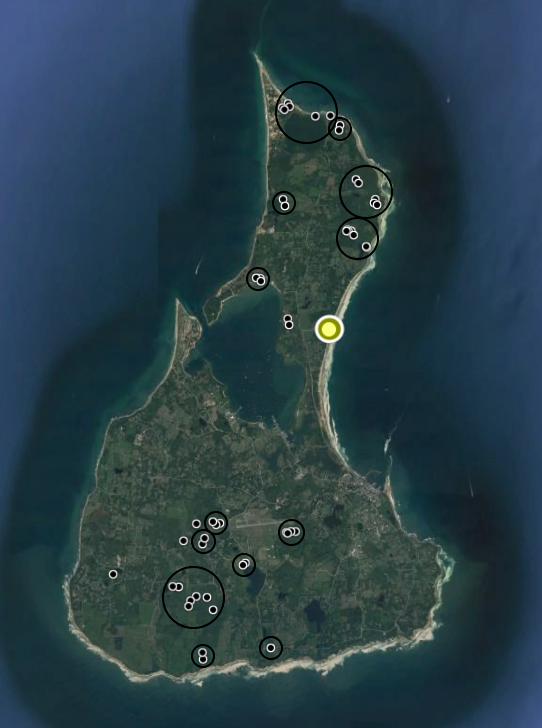
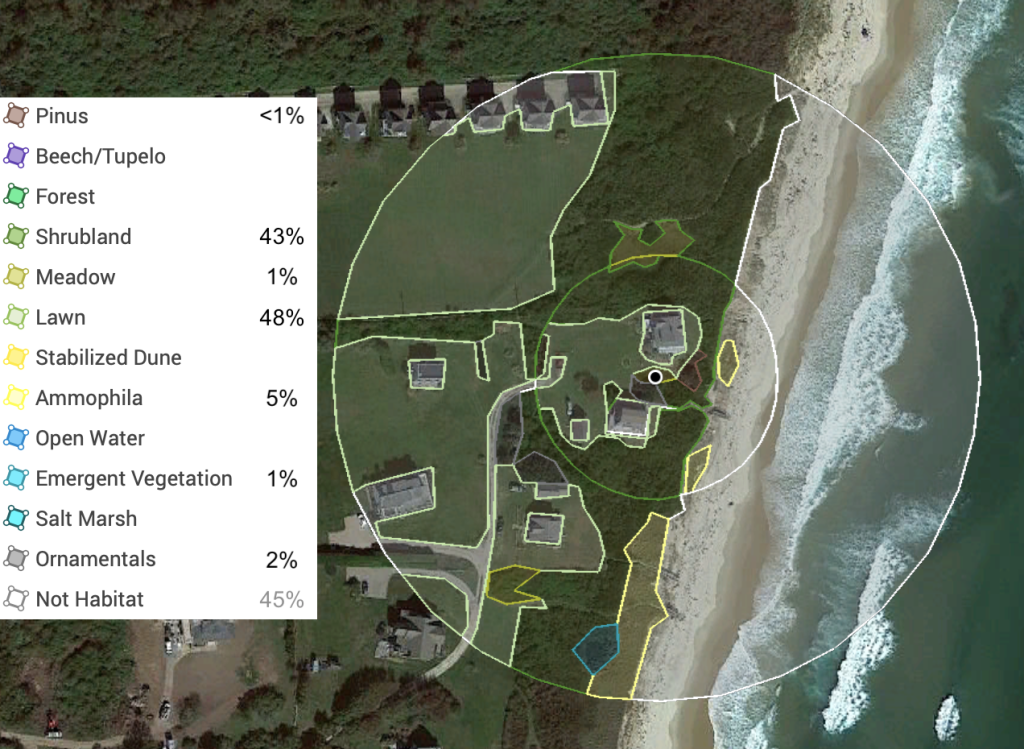
Figure 1. Map of Block Island with survey sites and areas and the Hunt property highlighted.
Figure 2. Land cover analysis of the Hunt property area within 150′ and 400′ of a point near the center of the porch lights used for surveying. Percent cover values are for within 400′ and exclude non-habitat cover.
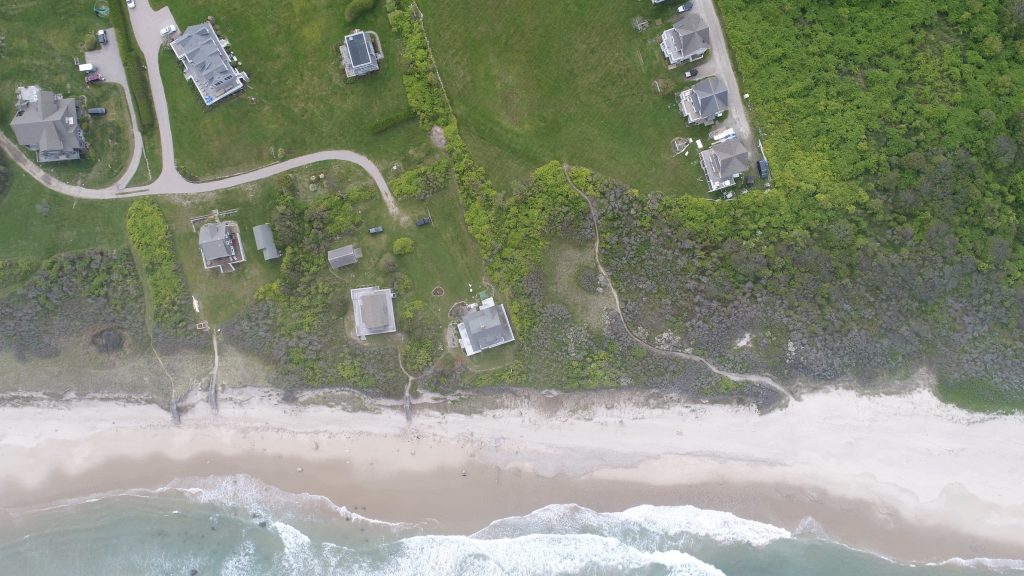
Figure 3. Aerial view of AH, 26 May 2020. North is at right. Most green shrubbery is Celastrus orbiculatus (Oriental bittersweet) and Rosa multiflora (multiflora rose), both invasive species. The darker green areas near the shore, most prominent at far right abutting the beach, are Rosa rugosa (beach rose), another invasive species. The white flowers found mainly along the long path to the beach left of center are Prunus maritima (beach plum). Most of the shrubs that have not yet leafed out are Myrica pensylvanica (bayberry).
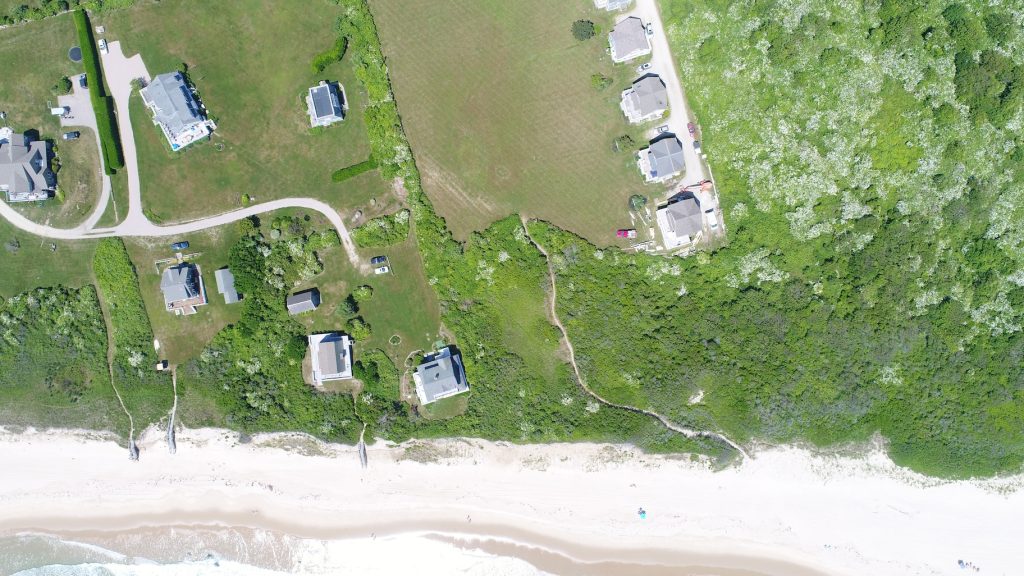
Figure 4. Aerial view of AH, 20 June 2020. North is at right. All the shrubs have leafed in, and the white blossoms of Rosa multiflora (multiflora rose) are highly conspicuous. Most of the dead shrubs concentrated near the shore, visible in gray, are bayberry plants likely killed by salt spray during Superstorm Sandy in 2011.
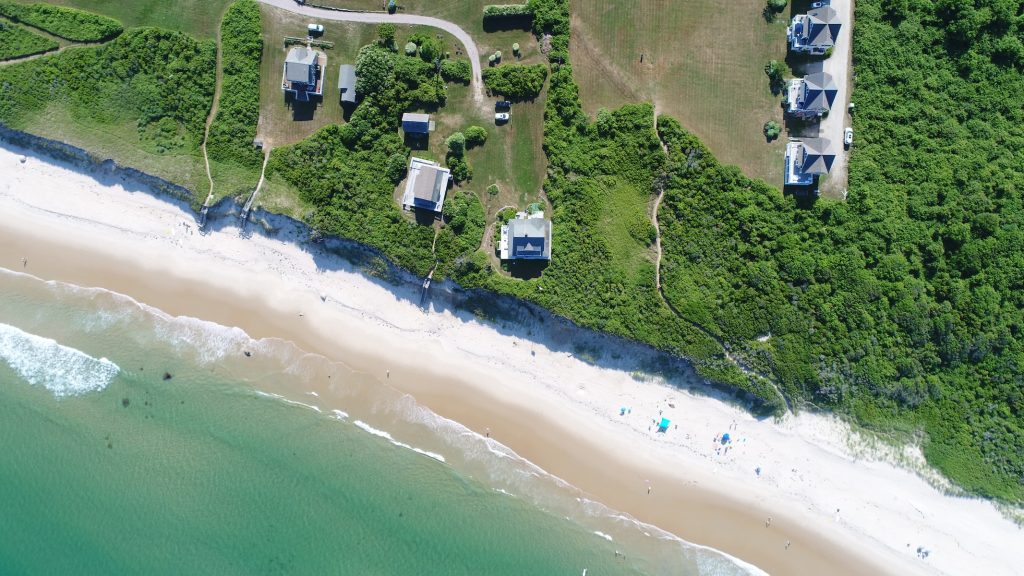
Figure 5. Aerial view of AH, 9 July 2020. North is down right.
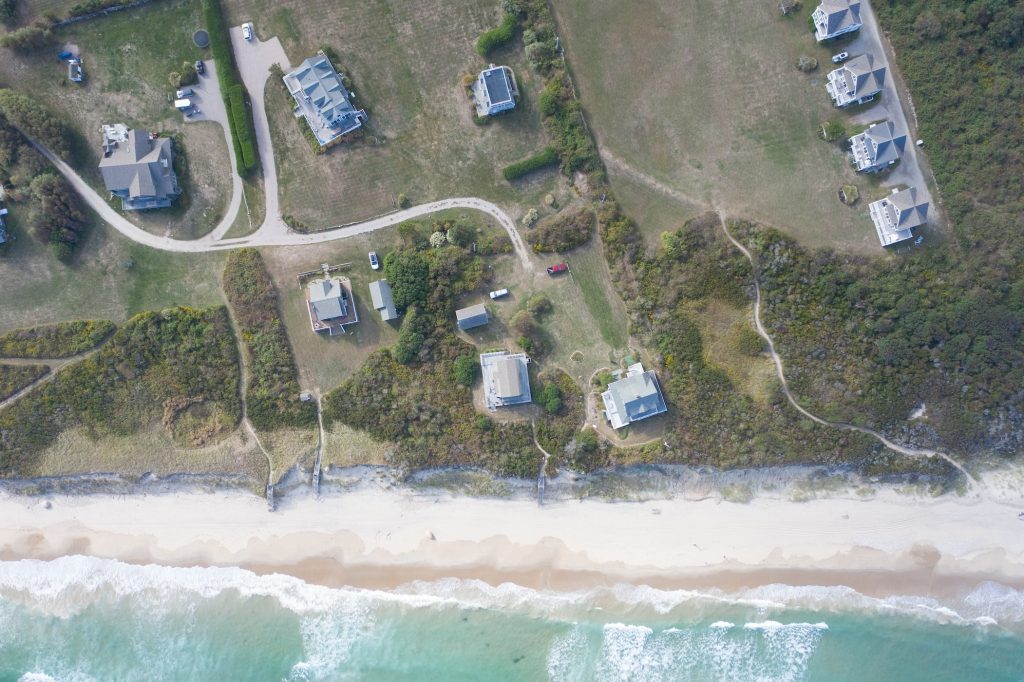
Figure 6. Aerial view of AH, 29 September 2020. North is right. The yellow blossoms are Solidago and Euthamia (goldenrods), mainly S. rugosa (rough-stemmed goldenrod), S. sempervirens (seaside goldenrod), and E. graminifolia (grass-leaved goldenrod). Also visible near the center of the image in an island of shrubs on the Hunt property are the white blossoms of Baccharis halimifolia (groundsel bush).
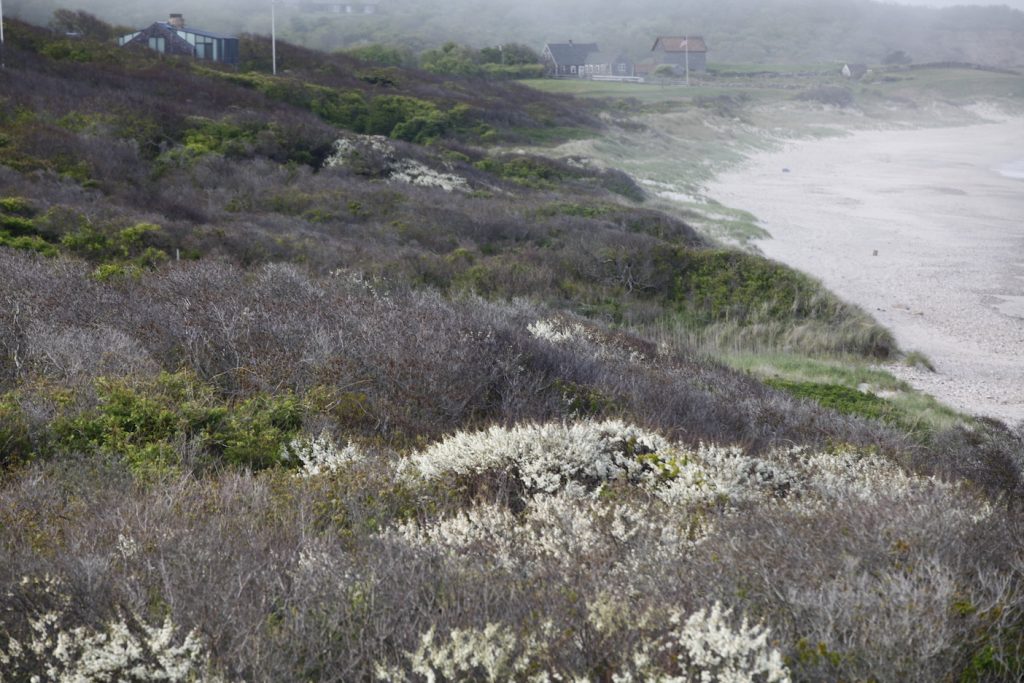
Figure 4: View looking north from AH, 27 May 2020. White blossoms of beach plum, bare branches of bayberry, and dense stands of beach rose in the dunes feature prominently. The more distant dunes covered in Ammophila breviligulata (American beachgrass) were wiped out by Superstorm Sandy in 2011 and took several years to recover.
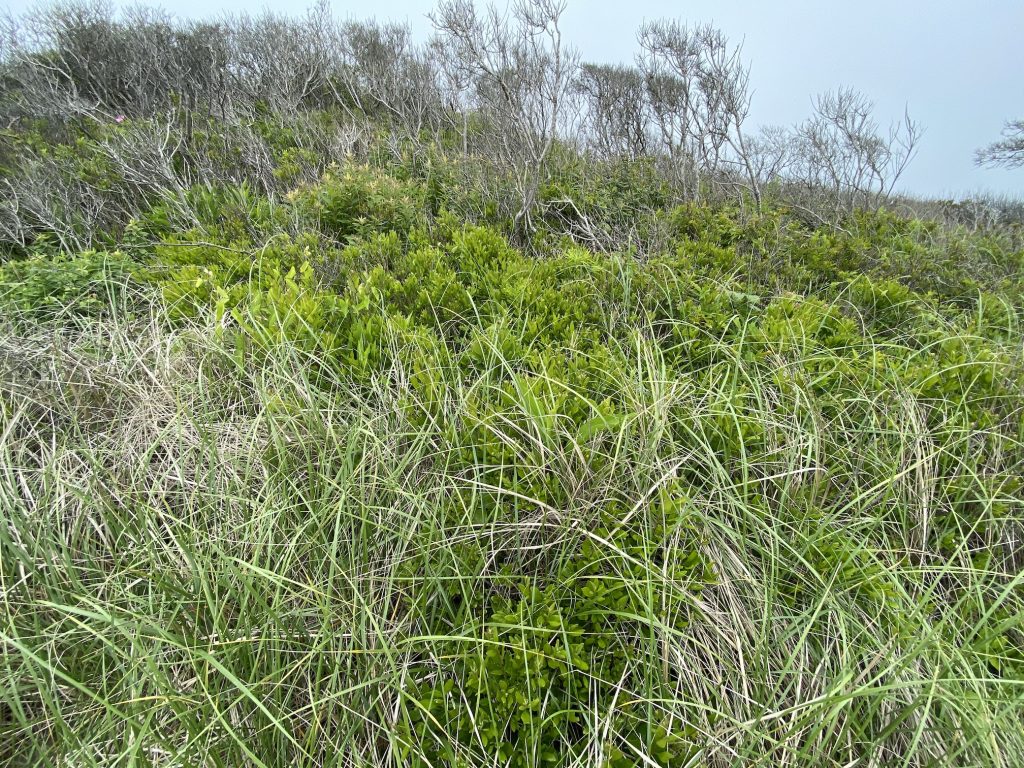
Figure 5: Habitat immediately behind unconsolidated beachgrass-covered dunes just north of AH, 18 June 2020. The living shrubs are bayberry, as are the taller dead shrubs; the dead shrubs may have been killed by salt spray during Superstorm Sandy in 2011.

Leave a Reply

Your email address will not be published. Required fields are marked *