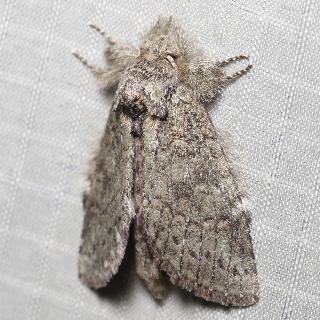
Cecrita guttivitta
930086.00 —
7994 —
Cecrita guttivitta
Larval Host(s)
Presumed main host
on Block Island:
on Block Island:
Known hosts:
unclear/unknown
Polyphagous (woody plants)
Remarks
In his report on trapping of macromoths on Block Island on 17 July and 4 September 1996, Mark Mello reported this species for the latter date. This would be a singular late record for a species that flies in late spring and early summer locally; our latest record is 26 June. While it is not inconceivable for a moth to eclose very far out of date, I have presumed for now that Mello's record was a misidentification of the similar C. biundata, which he did not otherwise record in his 1996 collecting. A voucher specimen was taken, so it should eventually be possible to check the true identity of the specimen.
Life History
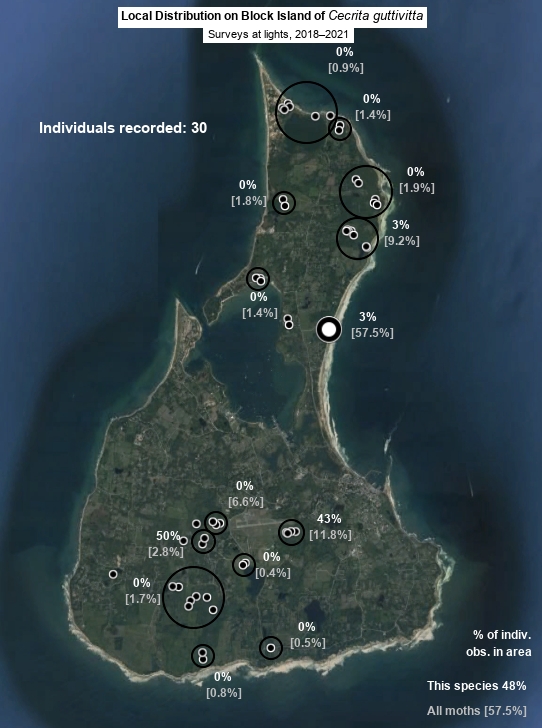
Univoltine on Block Island with adult records mid-May to late June. While the species has been recorded feeding on a wide variety of trees and shrubs, including Amelanchier and Prunus, which are common across much of Block Island, it has been found on Block Island mainly at two forested sites, suggesting it has stricter habitat requirements than its polyphagy might suggest.
References
Adult phenology on Block Island of Cecrita guttivitta