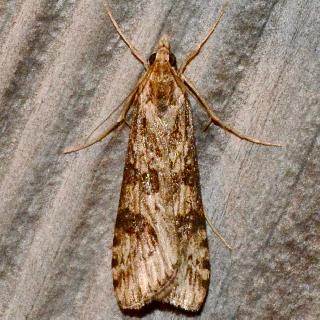
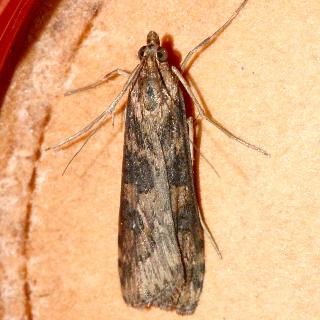
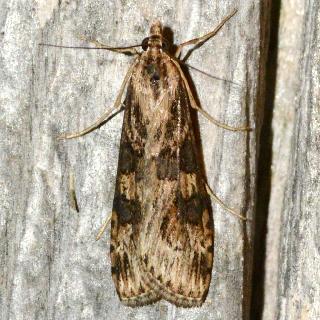
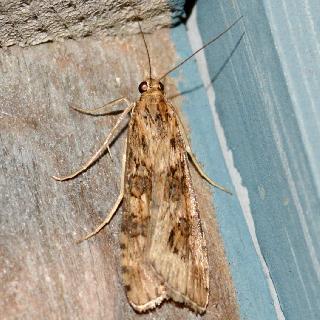
Nomophila nearctica
801365.00 —
5156 —
Nomophila nearctica
Larval Host(s)
Presumed main host
on Block Island:
on Block Island:
Known hosts:
Migratory
Polyphagous (herbaceous plants)
Remarks
Part of a global species complex formerly all considered Nomophila noctuella.
Life History
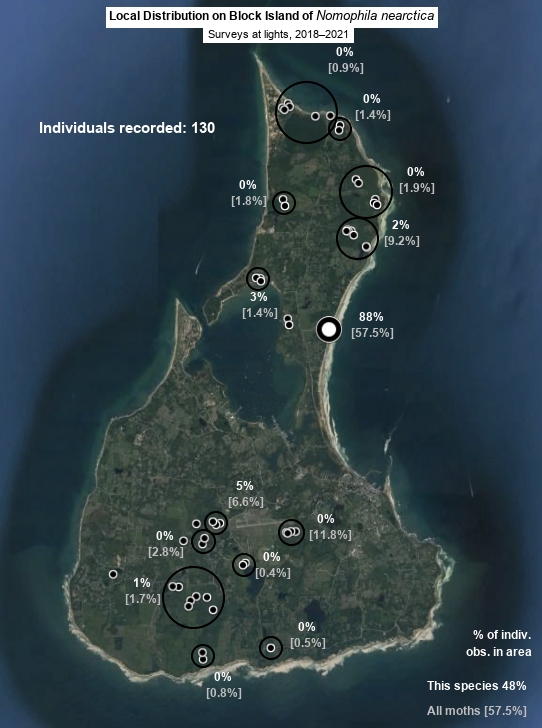
Munore (1973) reported that the species is migratory in much of its North American range. Ellis (1925) found in a rearing study that this species is bivoltine in New England, with a first generation of adults emerging in late May and a second in July. On Block Island, adults are seen at lights mainly in August and September; iNaturalist data support the same pattern, a long flight period with peak abundance in August, from southern Canada to Maryland. Farther south, the first generation is more prominent at lights; peaks in abundace are in April and September around Dallas. Associated with open habitats on Block Island.
References
Adult phenology on Block Island of Nomophila nearctica
Abundance data late May to early October